Summary: A squeak is the sound of two parts moving against each other, but the safe fix depends on what covers the subfloor. Start by mapping the exact loaded area. Powder may help a dry, unfinished wood-board edge, while a purpose-made breakaway fastening kit may suit some carpeted wood-framed floors. Neither belongs automatically on engineered flooring, laminate, vinyl, tile, or a floor with radiant heat. This guide explains what a renter or homeowner can inspect from above, what each surface permits, and when movement, moisture, or hidden services make fastening a professional job.
What to do first
Do not begin by driving a screw where the noise seems loudest. Sound travels through joists, ducts, and connected boards, so the audible point may be several inches from the moving joint. Clear the area, put on clean soft-soled shoes, and ask a helper to listen while you load the floor in a repeatable way. A phone recording can capture timing, but it cannot identify a hidden joist or pipe.
Gather painter’s tape, a pencil, a flashlight, a straightedge, and any installation records for the flooring. A noninvasive stud finder may offer clues on a simple wood-framed floor, but flooring layers, metal fasteners, foil-backed underlayment, and pipes can produce confusing readings. Follow the device instructions and never treat one reading as permission to drill.
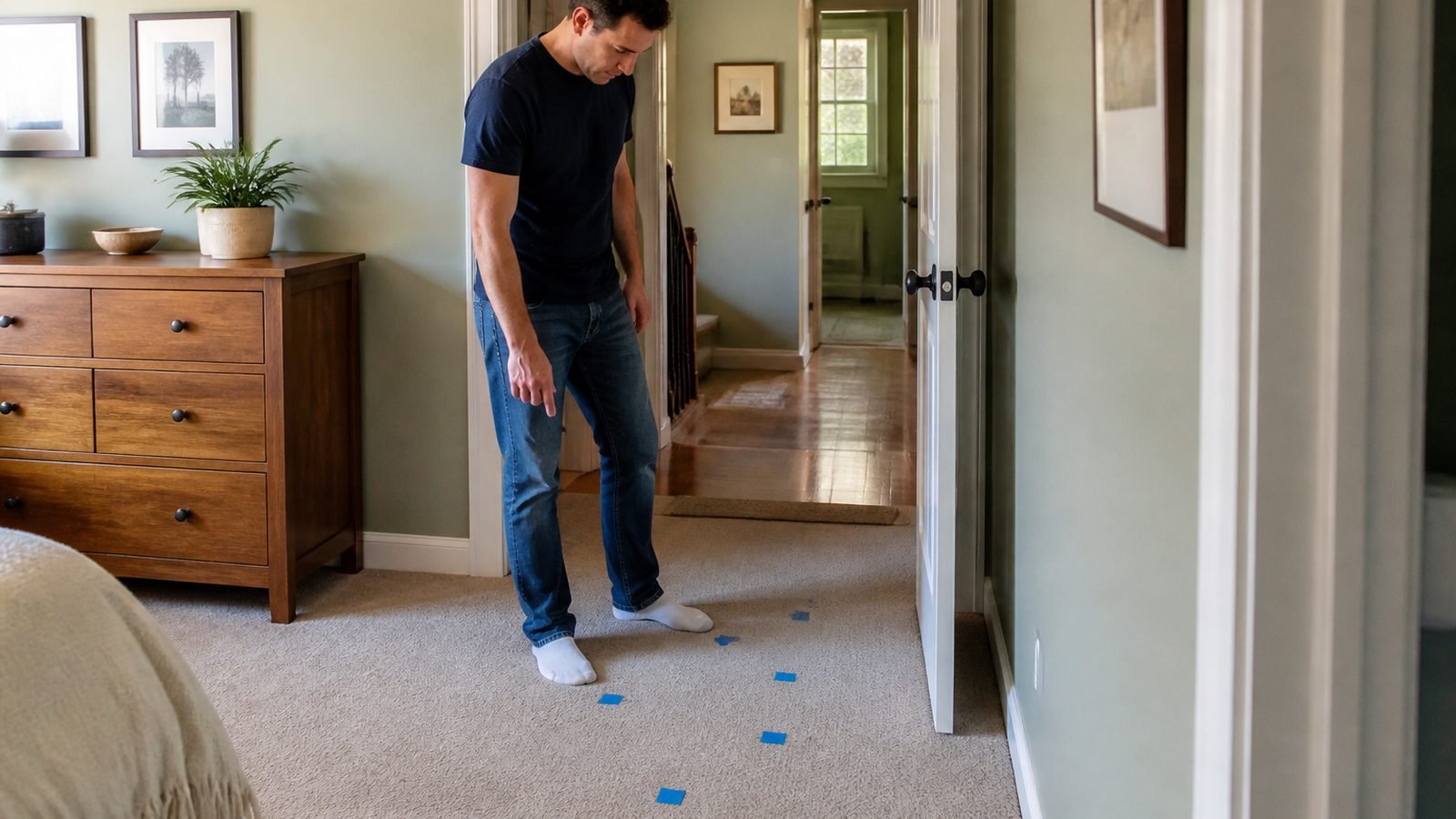
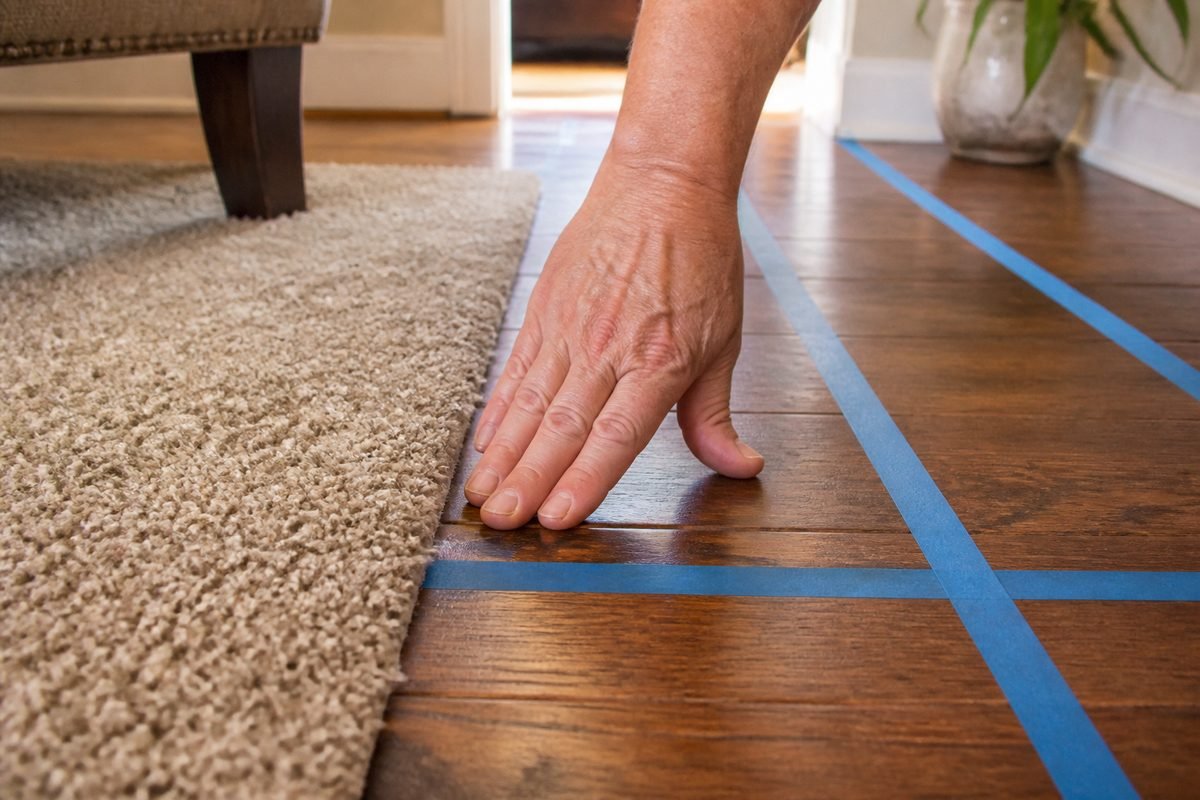
- Mark a two-foot square around the sound with small tape tabs.
- Have one person take short heel-to-toe steps while the listener stays low and off the marked area.
- Mark where the foot is placed when the sound starts, not where the listener thinks it comes from.
- Repeat from a perpendicular direction and then while shifting weight without stepping.
- Note whether a board edge opens, a carpeted area deflects, or a whole panel moves.
Locate the movement before choosing a fix
Board-edge friction
On traditional solid strip flooring, two finished boards may rub along a tongue-and-groove edge as weight transfers between them. The noise is usually sharp and closely tied to a visible seam. You may see a tiny edge movement but no broad depression. Seasonal dryness can loosen a joint, while humid weather can tighten boards and create a different rubbing point. A dry lubricant is sometimes useful here, but only when the floor manufacturer permits it and the powder will not stain the finish or fall into an occupied space below.
Finish floor moving over underlayment
Floating laminate, click-lock engineered wood, and many luxury vinyl plank floors are designed to move as a connected field over underlayment. Squeaks or clicks near a wall can come from an inadequate expansion gap, debris under a joint, a damaged locking edge, or an uneven substrate. Face screws defeat the floating design and may chip the wear layer, restrict expansion, void a product warranty, and create a visible hole. The correct remedy may require lifting planks from the nearest wall; that is not the same repair as tightening a wood subfloor to a joist.
Subfloor moving on a joist
A dull chirp accompanied by localized vertical movement can occur when a plywood or board subfloor slides against a nail or joist. From below, a repairer can verify the joist and watch the joint. From above, the finish conceals both. A surface fastening system is therefore appropriate only when its instructions match the floor covering, subfloor, joist framing, and known service layout. Random long screws are not a substitute.
Bridging, ducts, or walls carrying the sound
If the squeak appears along a broad route, occurs when a nearby wall is pushed, or sounds without visible floor deflection, the source may be framing below, a duct rubbing wood, a partition fastener, or stair construction. More pressure from above can miss the moving connection. Mark the pattern and seek access through a basement, crawlspace, ceiling opening, or a professional inspection rather than peppering the finish with fasteners.
Choose the response by flooring material
Solid hardwood
First establish whether the boards are site-finished or factory-finished. Talc is often suggested online, but loose talc can become airborne, collect as pale residue in dark seams, and migrate through cracks. Graphite can permanently darken wood and grout; do not use it on a finished floor. If the maker permits a dry wood-floor lubricant, apply the smallest amount along the confirmed rubbing seam, flex the boards with foot pressure, and vacuum all excess with a soft brush. Stop if the powder changes color, packs into a beveled edge, or makes the walking surface slippery.
Face nailing or screwing hardwood leaves a permanent repair point and can split a tongue, hit the edge of a board, or pull one board below its neighbors. A flooring professional can select a nail gauge, drill a pilot hole, set the fastener, and fill the hole to suit the species and finish. That precision matters on thin wear layers and historic floors.
Engineered wood and bamboo
These products may be glued, stapled, nailed, or floated, and their thin decorative wear layer is easy to damage. Some bamboo products are especially prone to splitting at a fastener. Find the product instructions or ask the installer before applying powder, water, adhesive, or a screw. A floating installation should generally remain free to expand. A glued plank that has released may need compatible adhesive injection by a flooring specialist, but injection without knowing the adhesive and substrate can leave a hard lump or telegraph through the surface.
Laminate and luxury vinyl plank
Do not surface-fasten a floating laminate or vinyl field. Inspect the perimeter for a tight baseboard, quarter-round nailed through the planks, a heavy fixed cabinet installed on top, or a doorway transition that clamps the floor. Renters should photograph the location and report it rather than remove trim. Owners can have trim carefully removed to check the expansion space, but cutting planks or altering transitions should follow the flooring manufacturer’s clearance requirements.
Sheet vinyl and linoleum
A squeak beneath resilient sheet flooring usually cannot be treated without risking a puncture or permanent dimple. Old resilient flooring and adhesive may also require an asbestos assessment before sanding, cutting, or lifting. Do not inject oil, silicone, or household adhesive through the sheet. Oil can migrate, adhesive can discolor the material, and a puncture can admit wash water.
Carpet
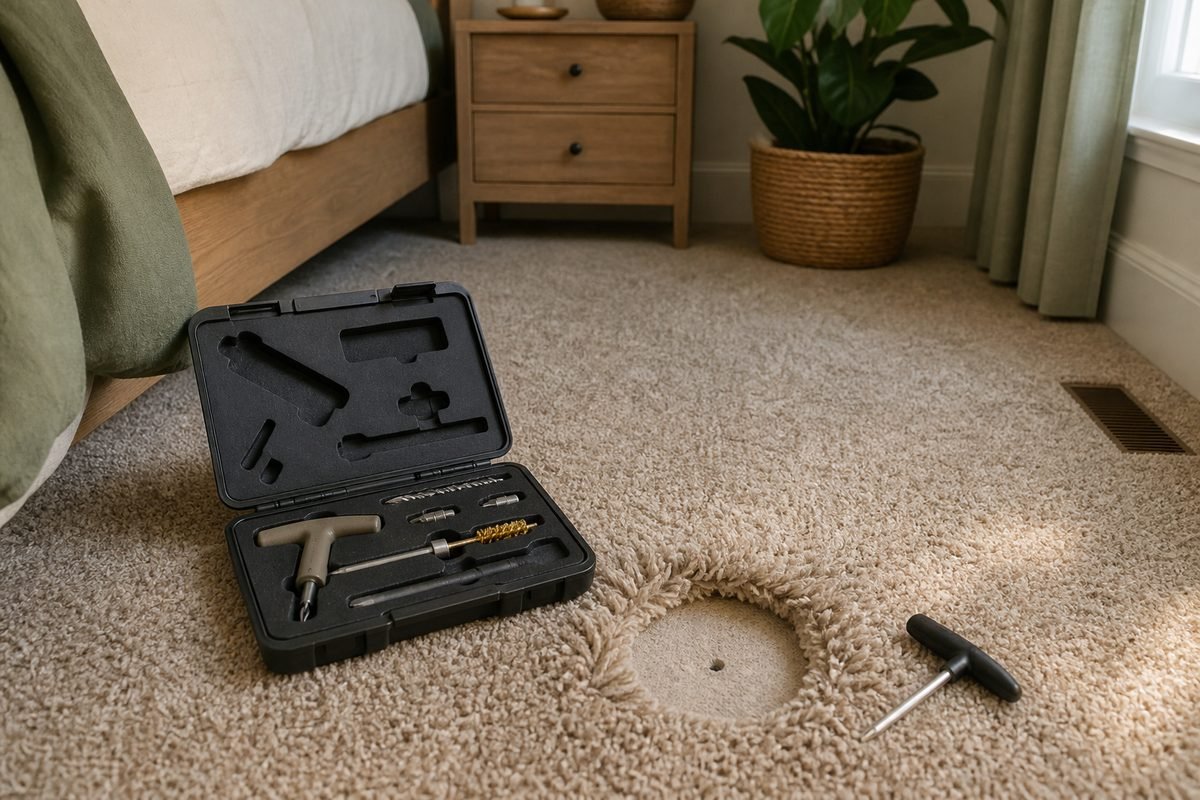
Carpet can hide a fastening point, which is why breakaway screw kits are marketed for carpeted floors over wood framing. Confirm that the carpet is not glued down, the substrate is wood rather than concrete, and no radiant system or service is present. The kit’s joist-finding method, screw length, spacing, depth-control fixture, and break-off tool work as a system; mixing ordinary deck screws with the fixture is unsafe. Separate carpet fibers at the entry point so they do not wind around the screw. If a thread catches or pulls a loop, stop immediately.
Tile and stone
Do not drill or screw through tile to chase a squeak. Movement under tile may indicate inadequate substrate stiffness, a loose underlayment, or bond failure. Cracked grout, hollow-sounding tile, or changing cracks need a tile or building professional. Surface fasteners can crack the tile and still fail to reach the moving connection.
Surface-side methods, in safest order
1. Remove external rubbing
Check whether a bed frame, floor register, threshold, shoe molding, or loose transition strip squeaks when the floor flexes. Lift the movable object or pad its contact point with a material suitable for the finish. Tighten a removable register screw only if it is clearly the source and the screw belongs to the register. Do not wedge a fixed wall or trim assembly blindly.
2. Use a manufacturer-approved dry edge treatment
This option is limited to confirmed board-edge friction on a compatible wood surface. Vacuum grit first. Test the product in an inconspicuous seam for color and cleanup. Apply with a small artist’s brush rather than pouring it. Work it into the joint by stepping beside, not directly on, the powder. Vacuum thoroughly and wipe only as the finish maker recommends. End the attempt if two light applications do not change the sound; repeated powder will not tighten a subfloor.
3. Use a purpose-made carpet fastening kit only when every condition fits
Read the complete instructions before opening the floor. Locate multiple joist points and check whether they align as expected. If readings conflict, abandon the fastening step. Drive a single test fastener through the depth-control fixture at the mapped movement point, break it below the carpet backing as directed, then inspect the carpet and walk the route. Do not add a row of screws until the first point is secure, invisible, and clearly reduces movement. Stop if the screw spins, fails to draw the floor, meets unexpected resistance, pulls carpet, or produces a new depression.
4. Request a targeted repair
Give the repairer a tape map, flooring type, installation method if known, dates or weather conditions when it occurs, and whether weight creates visible deflection. In a rental, obtain written permission before drilling, lifting trim, injecting adhesive, or applying a product that could stain. A concise request—“the floor deflects and squeaks within the marked 8-by-12-inch area beside the bedroom door”—is more useful than guessing that a joist is broken.
Practical example: a carpeted upstairs hallway
A homeowner hears a squeak on the third step past a bedroom. A helper listens from both sides while the homeowner shifts weight. Tape marks show that the sound begins over a six-inch area, but the loudest sound is near the wall. The house has conventional wood framing, no radiant heat, and photographs from renovation show wiring running in a different joist bay. A stud finder and the kit’s joist probe agree on two points in line.
The homeowner separates the carpet pile, uses the kit’s depth fixture, and installs one specified breakaway screw. The carpet remains intact, the head breaks at the designed depth, and the vertical movement decreases. Only then is a second fastener placed along the same verified joist as directed. If the first screw had spun or met metal, the correct next step would have been to stop and arrange access from below—not to try a longer screw nearby.
Common mistakes and clear stop conditions
- Using construction screws everywhere: length does not reveal what is below, and a large head leaves a crater in finished flooring.
- Spraying oil or silicone: it can stain seams, create a slip hazard, interfere with future refinishing or adhesive, and migrate into porous materials.
- Assuming every wood-look floor is hardwood: laminate, vinyl, engineered wood, and bamboo require different handling.
- Drilling through tile or resilient sheet: the surface damage can exceed the nuisance, while the structural movement remains.
- Ignoring moisture: squeaking with swelling, staining, softness, or odor calls for leak and subfloor evaluation.
- Fastening a rental floor without consent: even a concealed carpet repair permanently alters the building.
Arrange professional evaluation when the floor feels springy across more than a small point, movement reaches a stair landing, boards tent or separate, fasteners rise, tile cracks recur, or the noise begins after a leak or structural alteration. Urgent action is warranted for a suspected active leak, an unstable stair, or a sudden change in level. Noise alone is often not an emergency, but it should not distract from those physical signs.
For related moisture checks, see how to distinguish winter condensation from a window leak. Owners of aging buildings can add the floor location to this seasonal checklist for an older house. If the area also smells damp, use the source-finding steps in the musty closet guide before closing the issue as a simple squeak.
Frequently asked questions
Can baby powder stop a hardwood squeak?
It may temporarily reduce dry friction at a compatible board edge, but it will not tighten a loose subfloor. Many products sold as baby powder use cornstarch rather than talc, and either material can cake with moisture or show in dark seams. Use only a floor-maker-approved product, test cleanup, and keep powder out of the breathing zone.
Can I screw through hardwood and fill the hole?
Technically, some solid wood floors are repaired this way, but surface appearance is only one risk. You must know the board construction, joist position, fastener angle and depth, and hidden-service layout. For engineered, floating, radiant, historic, or unknown floors, professional identification is the prudent choice.
What if the squeak changes with the seasons?
Wood dimensions change as indoor humidity changes. Record when the sound appears and maintain reasonable indoor humidity for comfort and material stability, but do not force a specific humidity solely to silence one joint. A seasonal squeak can still involve a loose fastener, so inspect for movement and damage.
Is a squeak a structural problem?
Often it is friction at a connection rather than loss of structural capacity. However, noise combined with broad deflection, softness, cracking, slope, water damage, or a recent impact deserves qualified evaluation. The sound cannot rule those problems in or out.
What can a renter do?
Map the location, remove furniture contact, document visible movement, and report the flooring type and timing. Do not drill, lift planks, remove trim, inject adhesive, or apply staining powder without written approval. The owner needs the opportunity to check building services and the lease may assign repairs exclusively to management.
Conclusion
A successful surface-side squeak repair begins with identifying both the movement and the floor covering. A small amount of approved dry lubricant can address a rubbing solid-wood edge; a complete breakaway kit can address certain carpeted wood-framed floors. Floating planks, tile, resilient sheet, radiant assemblies, and unknown construction require different access or professional diagnosis. Map carefully, use the least invasive compatible method, and stop when the floor shows moisture, damage, broad deflection, or an uncertain fastener path.