Summary: This reset is a 30-minute restoration of function, not an attempt to clean the entire home. Five timed rounds remove trash and dishes, start one laundry load, clear the entry and main surfaces, restock essentials, and prepare the next day. Household members work from assigned zones, and repairs or deep-cleaning jobs go onto a separate list.
Define what “reset” means before the timer starts
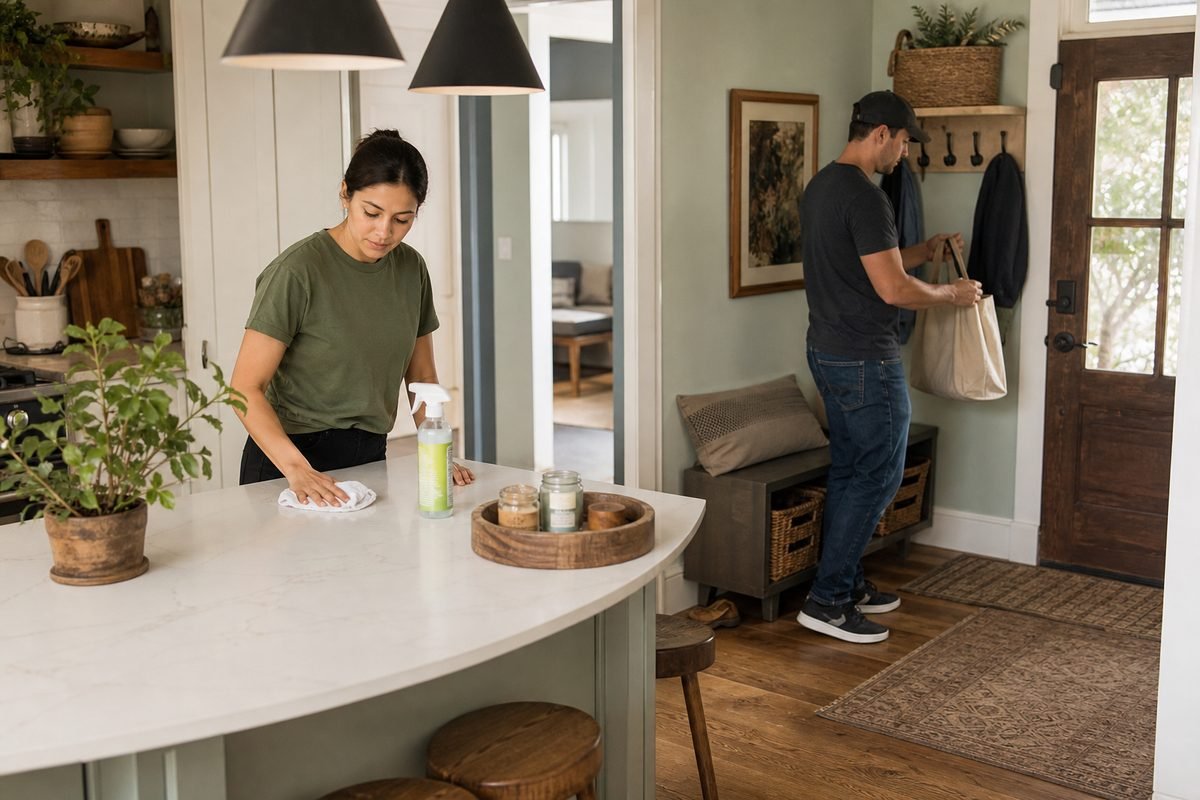
A successful reset makes the home easier to use for the next several days. The sink can accept the next meal’s dishes. The main walking paths are safe. The entry holds the shoes, bags, and keys needed for the next departure. The bathroom has toilet paper and hand soap. Laundry is contained, not necessarily finished. The main table or counter has enough open space for its intended job.
Do not include oven cleaning, grout scrubbing, closet editing, paperwork filing, appliance repair, stain treatment, or a full-floor mop. Those can be valuable, but each can swallow the timer. Keep a “later” note on paper or a shared phone list. Write the job, location, and owner—“Jordan: tighten loose hall knob Saturday”—then continue the reset.
Choose one weekly start cue
Attach the reset to an event the household can recognize: after Sunday breakfast, before Friday movie night, or at 6:30 p.m. on the least crowded weekday. Put the event on the shared calendar. If a week is missed, restart the next scheduled session; do not turn the following reset into a one-hour punishment.
Minutes 0–2: launch without hunting for supplies
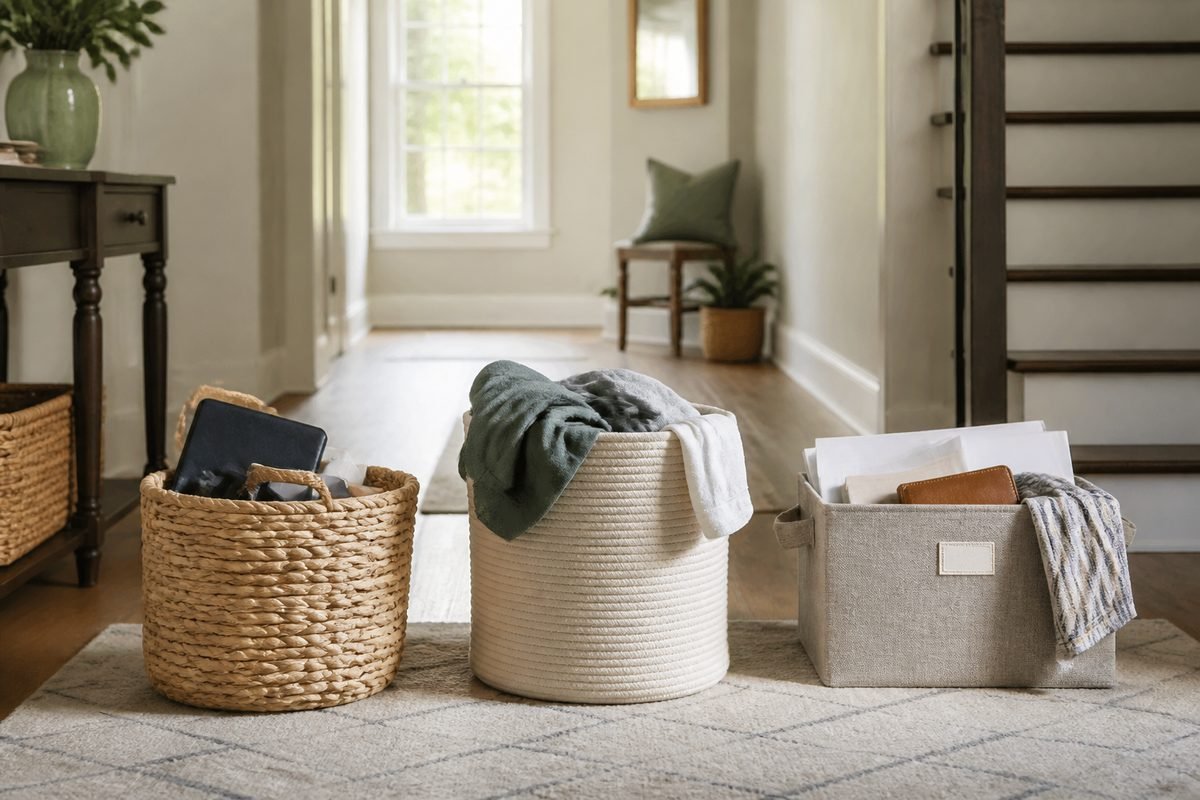
Store a small reset kit where adults can reach it: timer, trash bags, washable cloths, all-purpose product suitable for the home’s surfaces, and a marker. Keep cleaners secured from children and pets and never mix products. Place one empty “belongs elsewhere” basket on each floor or give each person a handled basket. The basket is transportation, not permanent storage.
- Set one visible timer for 30 minutes.
- Start a short playlist or call out time checkpoints if that helps the household coordinate.
- Assign zones and one concrete outcome to each person.
- Put a trash bag at the main collection point and an empty laundry hamper near the busiest route.
- Open the “later” note so nobody starts a repair during the reset.
If you live alone, assign yourself a route rather than a room: kitchen, entry, bathroom, living area, bedroom. This prevents circling the same pile. If several people participate, zones prevent everyone from carrying one mug while the kitchen bottleneck remains untouched.
The exact 30-minute weekly reset
Minutes 2–7: collect trash, recycling, and dishes
Walk the main rooms once. Pick up obvious trash and empty only bins that are full or contain odor-producing waste. Carry cups, plates, and food containers to the kitchen. Put dishwasher-safe items into the dishwasher; otherwise stack dishes safely beside the sink in the order they will be washed. Do not stop to scrub a pan. Put food away promptly according to safe storage practices and wipe only visible food spills that could stain or attract pests.
In a multi-person home, one person handles kitchen intake while others collect. Collectors announce sharp or leaking items instead of burying them in a bag. Tie off trash and place it in the household’s normal secure destination, but do not spend reset time washing every bin unless there is a spill.
Minutes 7–12: contain laundry and start one useful load
Gather clothing and towels from floors, bathroom hooks that are overloaded, and the main living area. Sort only enough to start the most useful load. Check pockets, garment labels, and machine instructions. Choose the load that removes a near-term bottleneck—work clothes, school uniforms, towels, or bedding—not necessarily the largest pile.
Start the machine only if someone will be available to move or dry the load on time. Set a phone reminder for the cycle’s expected end. If laundry cannot be run, separate the next load in a labeled hamper and leave it contained. Do not begin hand-washing, stain treatment, folding old loads, and closet reorganization simultaneously.
Minutes 12–18: clear the entry and primary landing surfaces
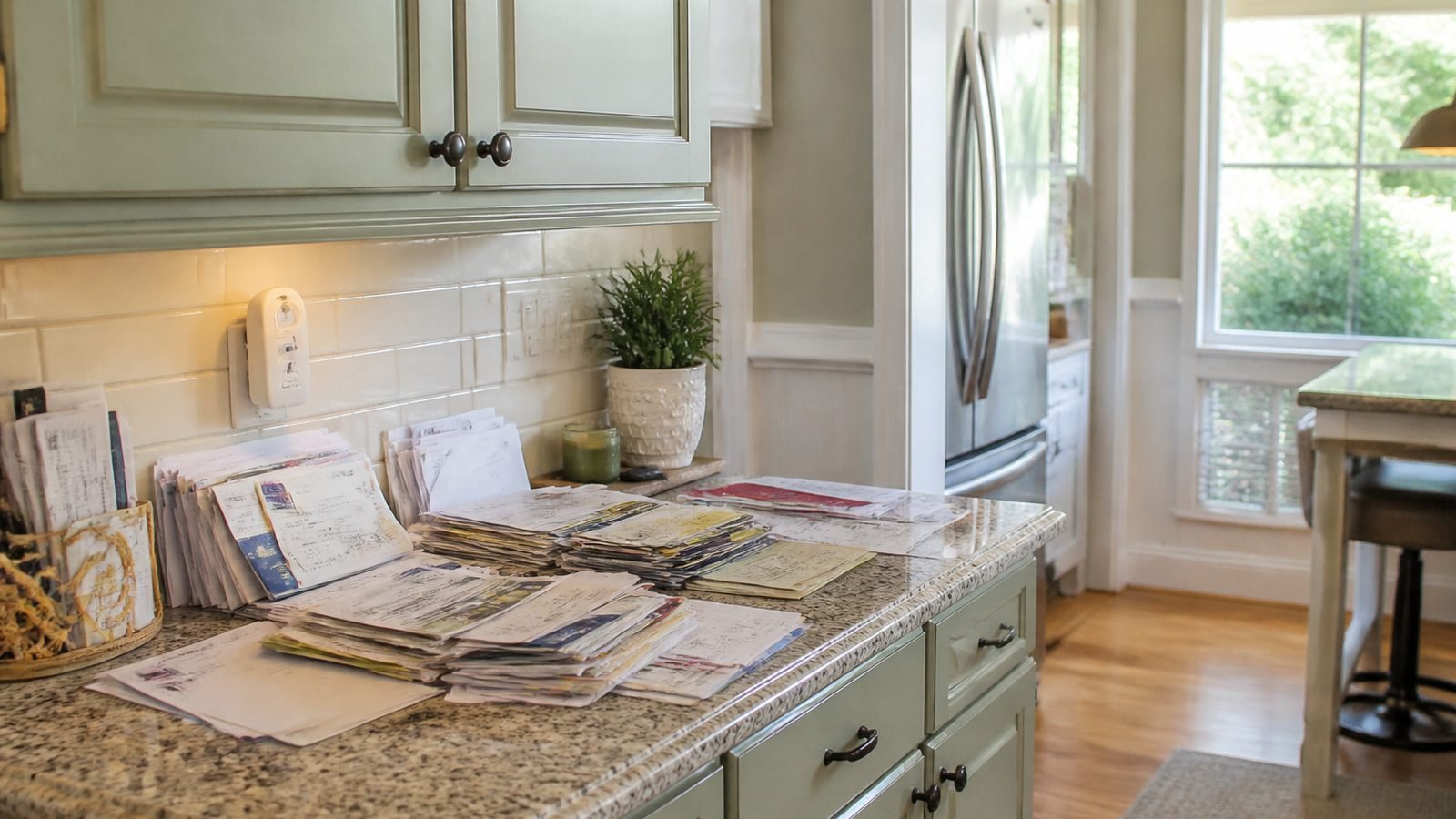
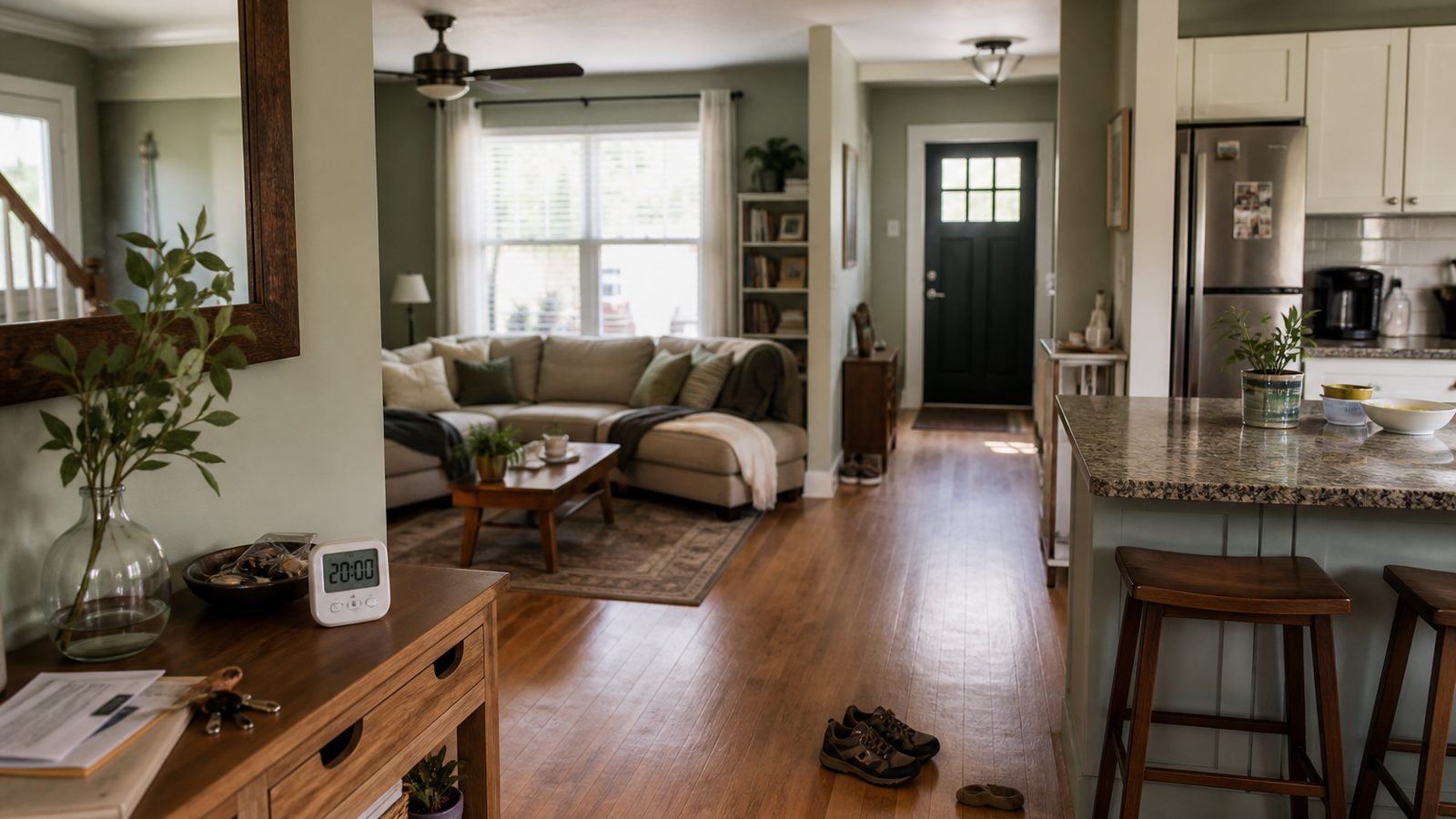
Restore the front door path first. Pair shoes, hang coats, put keys in their designated spot, return umbrellas, and place outgoing returns or library books by the door without blocking egress. Then clear the kitchen table or the section of counter used for meals and food preparation. Paper goes into the household paper inbox, not into a new stack; the kitchen-counter paper system provides the full inbox/action/file/shred workflow.
Use destination baskets for items that belong in another room. Write the destination on a sticky note if needed: upstairs, child’s room, office. Do not open drawers to “make room” by stuffing items inside. Each basket must be delivered during the final round.
Minutes 18–23: reset bathroom and kitchen essentials
In the most-used bathroom, replace the toilet-paper roll if low, put one spare within reach, refill hand soap from the product’s compatible supply, hang towels, cap toiletries, and clear the floor around the toilet and sink. Wipe the sink only if your surface and cleaner instructions allow it. Medication returns to secure storage, never a public basket.
In the kitchen, replace the dish towel, check that dish soap is available, put the sponge or brush where it can dry, and clear the sink drain. If the dishwasher is ready and the household normally runs it now, start it. Do not run a nearly empty machine solely to check a box; the reset should fit normal use.
Minutes 23–27: prepare tomorrow and close open loops
Check the next day’s calendar. Put required bags, signed forms, keys, transit cards, and weather-appropriate outerwear in the departure zone. Charge essential devices in their normal safe location. Add truly needed groceries or household supplies to the shopping list instead of relying on memory. Review the laundry reminder and any appliance already running.
Spend no more than one minute recording deferred work. A useful entry has an action, location, owner, and next time: “Sam—buy correct bulb for desk lamp Tuesday.” “Fix office” is too vague and will return as clutter.
Minutes 27–30: deliver baskets and stop
Each person takes a destination basket and returns items to their established homes. If an item has no home, place it in one clearly labeled decision box outside food-preparation and walking areas. Limit that box to one container and schedule a separate 15-minute decision session. Return empty baskets, tie off remaining trash, and stop when the timer sounds.
Do a 20-second safety walk: doors and exits clear, cleaners secured, candles and cooking appliances off as appropriate, running machines expected, and no wet floor left unmarked. The home does not need to look photographed. It needs to function.
How to divide the reset fairly
Two adults
Assign outcomes of comparable effort, not identical room counts. Adult A can own kitchen intake, dishwasher, and the next-day food list. Adult B can own trash route, entry, and bathroom supplies. At minute 23, both deliver baskets and prepare tomorrow. Switch roles the following week so one person does not permanently inherit the least pleasant tasks.
Adults and school-age children
Give children short, visible tasks matched to age and ability: collect non-breakable cups, pair shoes, place books on a shelf, carry their clothing to a hamper, stock sealed toilet-paper rolls, or return toys to an open bin. An adult handles chemicals, sharp objects, heavy trash, medication, and uncertain food. “Clean your room” is not a 30-minute assignment; “put dirty clothes in the hamper and books on the shelf” is.
Teens
Teens can own a complete zone such as entry plus living-room reset, or laundry launch plus delivery. Define done: clear the walking path, put remotes in the tray, carry dishes to the kitchen, and deliver the upstairs basket. Rotate zones and include the work on the shared checklist rather than treating it as spontaneous help.
One adult with young children
Use a contained activity or let children do one supervised collection task. Prioritize trash, dishes, safe paths, and tomorrow’s essentials. Skip surface wiping if supervision makes it unsafe. A 20-minute safe reset plus 10 minutes of child care still counts as the household’s 30-minute block.
Roommates
Separate shared-zone work from private-room work. One roommate resets kitchen surfaces while another handles shared trash and entry. Personal items go into named baskets outside bedroom doors, not into rooms without permission. Agree beforehand on who finishes a running dishwasher or laundry load.
Adapt the plan to the home you actually have
- Small apartment: Use one basket and one clockwise route. Spend the saved walking time on the sink and entry, which often share limited space.
- Two-story home: Keep a basket at each stair landing. Carry it only when using the stairs normally; do not create repeated trips during each round.
- No dishwasher: Use the first five-minute round to soak only what needs it and wash the items required for the next meal. Schedule the remaining dishes immediately after the reset if necessary.
- Pet household: Add food-bowl pickup, litter-area check, and leash placement to an assigned zone. Follow product and veterinary guidance for cleaning and food storage.
- Accessibility needs: Use reach-safe open bins, rolling carts where appropriate, seated sorting, lighter bags, and longer travel time between zones. Keep the 30-minute boundary but reduce scope.
- Irregular schedules: Use a shared completion board. Household members can each perform one timed segment within the same 24-hour window, with a named person responsible for final safety checks.
Example: two adults and two children
At 5:30 Sunday, one adult starts kitchen intake and the other takes trash and recycling. The older child pairs shoes, places school papers in the inbox, and gathers books. The younger child puts washable toys into an open bin with an adult nearby. At minute seven, the second adult checks pockets and starts the school-clothes load while the first loads the dishwasher.
During the surface round, each child gets a named basket. At minute 18, one adult stocks the bathroom; the other clears the sink and writes milk and dish soap on the shopping list. At minute 23, the family checks Monday’s calendar, places backpacks at the entry, and records a dripping bathroom faucet for a separate evaluation. At minute 27, everyone delivers one basket. The timer ends with the bedrooms imperfect but the sink, entry, bathroom, and departure plan functional.
Common reset mistakes and corrections
- Deep-cleaning the first dirty spot: Wipe an active spill, then record larger cleaning for another block.
- Moving clutter into hidden drawers: Use named destination baskets and deliver them before the timer ends.
- Assigning one person as manager and cleaner: Put zones and outcomes on a visible checklist so each capable person can start independently.
- Starting several laundry loads: Start one load that can be completed, and stage the next.
- Ignoring task completion: Name who will move laundry, empty the dishwasher, or take trash outside.
- Buying organizing products first: Run the reset for several weeks. Buy only when a repeated bottleneck shows the exact container or hook needed.
- Extending the timer every week: Stop at 30 minutes. Reduce scope or add a separate project block instead.
Reusable 30-minute checklist
- 0–2: timer, supplies, zones, and safety check.
- 2–7: trash, recycling, dishes, and exposed food.
- 7–12: contain laundry; start one finishable load.
- 12–18: entry, table, counter, and destination baskets.
- 18–23: bathroom and kitchen essentials.
- 23–27: tomorrow’s calendar, bags, shopping, and deferred list.
- 27–30: deliver baskets, secure supplies, and stop.
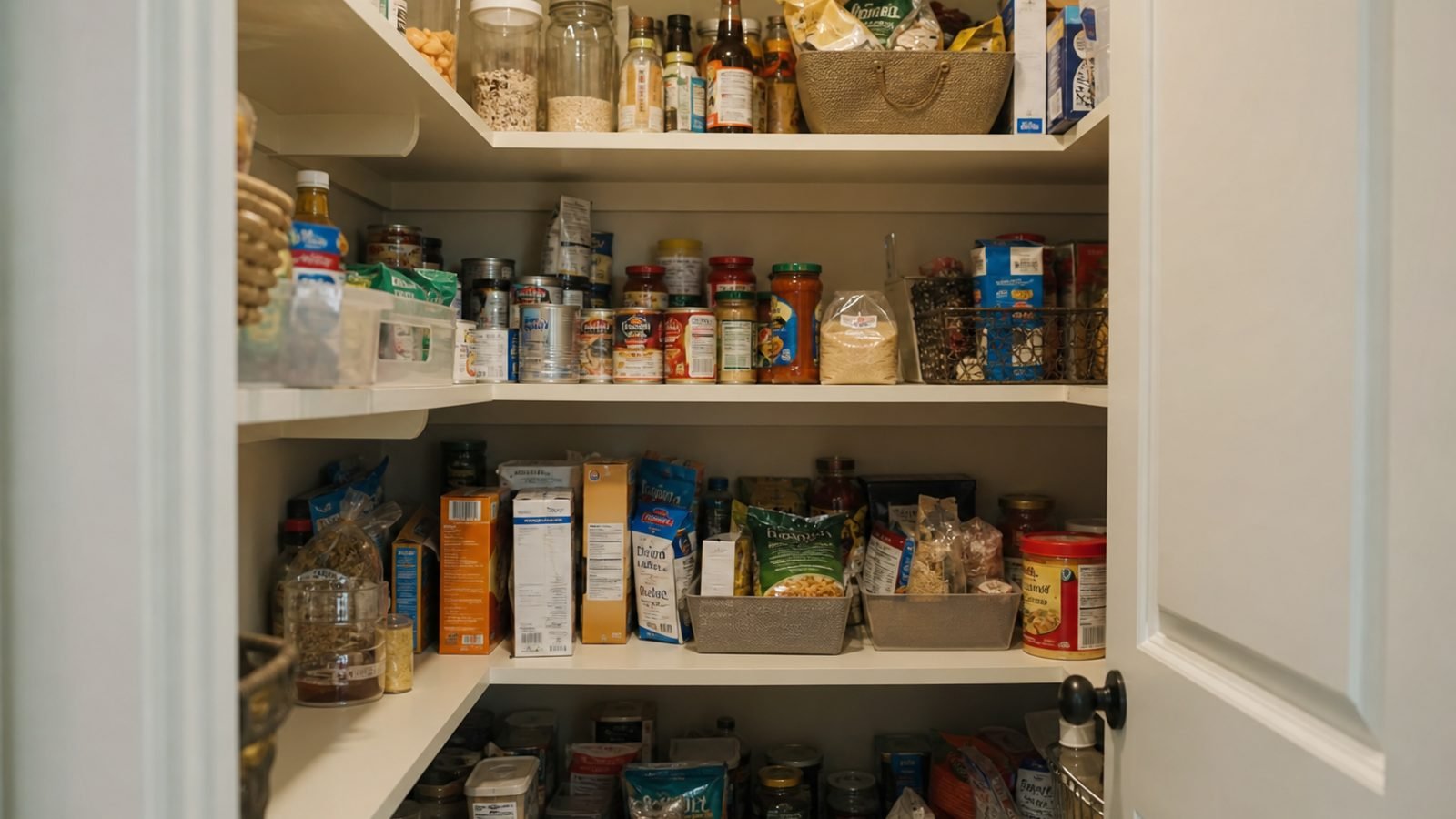
For a pantry that repeatedly slows grocery planning, use the deep-pantry organization guide as a separate project. Do not empty pantry shelves during this reset.
Frequently asked questions
What if the kitchen alone takes 30 minutes?
Use the reset to restore one usable sink section, collect food and dishes, and load or stage the next wash. Schedule the remaining kitchen work separately. Other household members can still handle safe paths, trash, entry, and bathroom supplies.
Should everyone work for the full 30 minutes?
Capable household members should have defined contributions, but tasks should reflect age, mobility, schedule, and safety. Fairness means transparent, rotating responsibility—not identical workloads.
What happens to items with no home?
Put them in one labeled decision box and schedule a short follow-up. Do not create multiple mystery boxes or allow the container to block food preparation or exits.
Can cleaning be part of the reset?
Yes, when it protects function: wipe a spill, clear a sink, or clean a small bathroom splash. Save whole-room dusting, mopping, and detail cleaning for another session.
What if we miss a week?
Resume the normal 30-minute routine. Prioritize trash, dishes, safe paths, and tomorrow’s needs. Do not double the next timer.
Conclusion
A repeatable reset succeeds by stopping. Use the exact rounds, give every participant a specific zone, restore high-impact functions, and record projects without starting them. Thirty focused minutes can leave some clutter visible while still giving the household a working sink, safe route, stocked bathroom, controlled laundry, and an easier next morning.